Historic Pensacola Village: what one $12 ticket actually gets you downtown
Admission is good for seven days, not one — which changes how you should plan a visit to the UWF Historic Trust's nine-acre downtown complex.
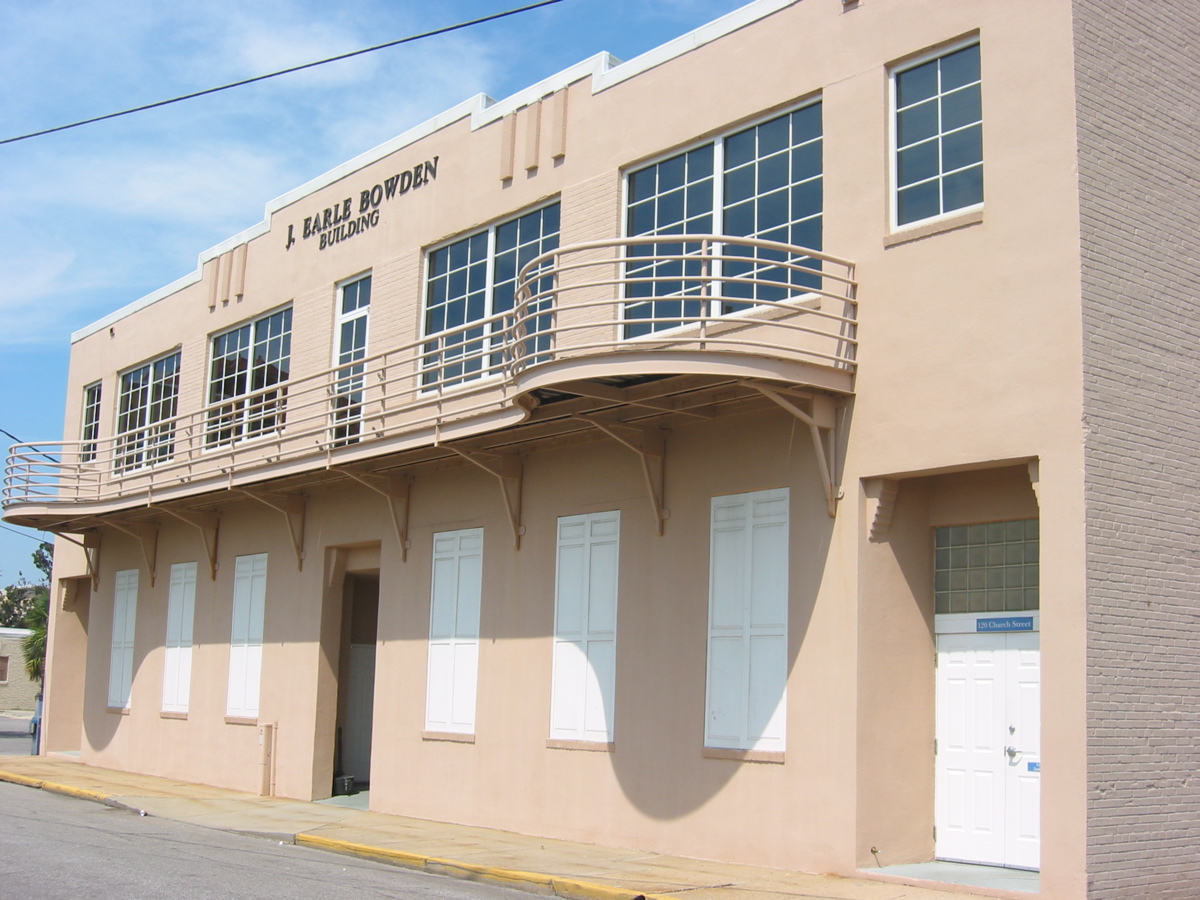
Most historic districts ask you to imagine what used to be on the site. Historic Pensacola mostly just points at the buildings that are still standing. Administered by the UWF Historic Trust, it is not a single museum but a cluster of them, and it occupies real ground: the Trust describes the site as encompassing "nine acres located within the footprints of the original Spanish and British forts in downtown Pensacola."
The properties list runs to seventeen entries. Among them are the Pensacola Museum of History, the Pensacola Children's Museum, the Pensacola Museum of Art, the Museum of Commerce and the Museum of Industry, alongside surviving houses including the Lavalle House, the Lear/Rocheblave House, the Dorr House, the Manuel Barrios Cottage, Julee Cottage, the Barkley House and the John Appleyard Cottage, plus Old Christ Church, the Tivoli High House, Voices of Pensacola, Fountain Park and an outdoor archaeological trail.
The organising idea is a phrase the Trust puts on its own front page: "One Ticket, Seven Days to Explore." That structure is the single most useful thing to understand before you arrive, because it changes what a visit should look like.
Hours and fees
Historic Pensacola lists general admission at $12.00 for adults and $7.00 for children ages 3 to 14. Children under 3 are free. A reduced $11.00 rate applies to several groups: seniors 65 and older, military and dependents, AAA members and UWF alumni. Admission is listed as free for members, UWF students and SNAP/EBT cardholders.
That ticket is not a day pass. The official hours and tickets page states that admission provides entrance to the Pensacola Museum of Art, the Pensacola Museum of History and other museums "for seven (7) days from the date of presentation" — so the $12 covers repeat visits across a full week, not a single sprint.
Hours are the detail that catches people out. The village is closed Monday. Tuesday through Saturday it is open 10:00 to 4:00. Sunday hours are noon to 4:00 for select museums only — the page specifies that "The Pensacola Museum of History, the Pensacola Children's Museum, and the Pensacola Museum of Art are open on Sundays." Two closures are posted on the same page: administrative offices close September 7, and on November 11 "All museums, offices, and sites of the UWF Historic Trust will be closed."
Guided house tours run at "11:00, 1:00, and 2:00 Tuesday through Saturday," per the same page, which names the Lavalle House, Old Christ Church, the Dorr House and the Lear/Rocheblave House as the houses offering guided tours. Tickets "may be purchased online or at one of our service desks in the Tivoli High House Shop, the Pensacola Children's Museum, the Pensacola Museum of History, or the Pensacola Museum of Art."
Getting there and parking
The anchor address is 330 South Jefferson Street, Pensacola, FL 32502, which is the Pensacola Museum of History — a building the Trust describes as "the three-story Mediterranean Revival architecture of the former Pensacola City Hall," built in 1907. The main phone number listed is 850.595.5985.
Parking requires a small amount of planning. Historic Pensacola states plainly that "The museums do not have dedicated parking. All posted signage must be obeyed for all day lots." Visitors are pointed to Premium Parking or City of Pensacola Parking for further detail. Two-hour street parking is a poor fit for a site of this size, which is another argument for using the seven-day ticket rather than trying to do everything at once.
Driving directions published by the Trust converge on the corner of Tarragona and Church Streets. From Interstate 10, the route is Exit 12 to I-110 South, then exit I-110 at 1C (Garden Street), left at the first light onto Tarragona, four blocks south to Church Street, then right — at which point, the Trust says, "The paid parking lot is on the right. There is 2 hour street parking throughout the site." From Pensacola Beach, cross the Bob Sikes Bridge, take Highway 98W through Gulf Breeze and over the Pensacola Bay Bridge, exit left onto Bayfront Parkway, follow it to Tarragona, turn right and go north two blocks to Church Street, then turn left. On that approach the Trust notes: "There is a paid parking lot to the right or 2 hour parking along the street."
What to know
The thing most visitors miss is that a significant part of the site is outdoors and interpretive. The Colonial Archaeological Trail is described by the Trust as "a collection of outdoor exhibits relating to the Spanish, British, and American occupations of Pensacola" that "highlights the rich deposits of colonial history and archaeology in the heart of downtown Pensacola." It is "a project of the UWF Historic Trust, the City of Pensacola, and the University of West Florida Archaeology Institute." A recent improvements project, partially funded by the Department of State, Division of Historical Resources, added stops at the Tivoli High House, Old Christ Church and the Barkley House; existing stops "received new interpretive panels, protective fencing, and exhibit elements," and the Trust installed "interpretive sound posts located at St. Michael's Cemetery, the Barkley House, and Historic Pensacola."
The individual houses reward slowing down. Julee Cottage at 210 E Zaragoza Street was built around 1805 and is associated with Julee Panton, described by the Trust as "a free woman of color" and one of the cottage's earliest owners; the Trust calls the building "the only surviving form of this urban Creole architecture in Pensacola," and it is Stop 2 on the African American Heritage Trail. Old Christ Church at 405 S Adams Street was completed in 1832 and is described as "one of the oldest surviving church buildings in Florida." The Trust notes that "The building was also occupied by federal troops during the Civil War," and that it has served as "an Episcopal Church, public library and museum."
Inside the Museum of History, the permanent exhibits are The City of Five Flags, which the Trust says was "Renovated in 2012," and Trader Jon's, built around the memorabilia of Martin "Trader Jon" Weissman, a bar owner the Trust says "was well known for his personal eccentricities such as his famously mismatched socks." A downloadable site map is offered online and can be picked up at museum service desks, and is worth having before you start walking.
Details in this guide were verified against the official Historic Pensacola website, operated by the UWF Historic Trust, in July 2026. Hours, admission prices, tour times and seasonal closures change; confirm current information at https://historicpensacola.org/plan-your-visit/hours-tickets/ before travelling.